
Getting Healthy SHOULDN'T be expensive
3 x 1 on 1 Personal Training session
FREE Proven Weight loss Meal Plan | Accountability and Support
Normally $150.00 - NOW $75.00
T&C APPLY
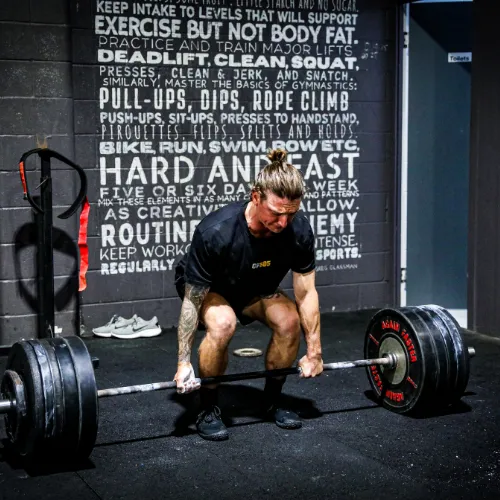
Nutrition & The Open
Fueling for the Crossfit OPEN: Eat like the Athlete You're becoming
Every year, as the CrossFit Open approaches, something shifts. The air feels different. Training takes on a little more purpose. Effort goes up a notch. Alongside the excitement of a worldwide event, there’s also that familiar nerves-in-the-stomach feeling that comes with testing your fitness.

The Open isn’t just a global competition. It’s a shared commitment to show up, work hard, and find out what you’re capable of. Think of it as your annual fitness check-up. And if that’s the case, this year is about showing up as the best version of you.
This six-week lead-up is the perfect time to look at how you fuel all that training. Not in a restrictive, joyless, count-every-calorie way — but in a practical, sustainable, CrossFit way.
The goal is simple: eat in a way that supports performance now while protecting long-term health. No quick fixes. No hacks that trade future health for short-term PBs. Just habits that help you train hard today and keep doing so for years to come.
Start With Real Food

Before we talk about tracking, timing, or optimisation, we start with quality.
CrossFit’s nutrition recommendation begins with a powerful filter:
“Eat meat and vegetables, nuts and seeds, some fruit, little starch, and no sugar.”
That single sentence cuts through almost all nutrition noise.
Real food doesn’t have ingredients — it is ingredients. Beef, eggs, salmon, potatoes, apples, carrots, yogurt, rice, berries, spinach. Foods your grandparents would recognise without reading a label. These foods are naturally nutrient-dense, structured, and satisfying.

Ultra-processed foods are the opposite. They’re designed for shelf life, low cost, and overconsumption — not for your health or performance. They digest quickly, spike blood sugar, and leave you hungry, flat, and chasing the next snack. Real food leaves you nourished, satisfied, and ready to train.
Cooking at home is one of the most powerful tools you have during the Open lead-up. Cooking builds awareness. You learn what’s in your food, how much you’re actually eating, and how different meals make you feel. You reconnect with nourishment — and often with the people you share meals with. Just like shared workouts build community, shared meals do too.
Protein: The Athlete’s Foundation
Once real food is in place, protein becomes the priority. Every system that contributes to performance relies on amino acids from protein — muscles, tendons, bones, hormones, enzymes, neurotransmitters, immune cells. When you lift heavier, recover faster, sleep better, or feel mentally sharper, protein is doing the work behind the scenes.
Most people under-eat protein. Aiming for roughly 0.7–1 gram per pound of ideal bodyweight helps support strength, recovery, lean mass, satiety, mood, and sleep. Protein is as close as nutrition gets to a performance cheat code.
Build each meal around a high-quality protein source: beef, chicken, eggs, fish, or dairy.
Fat: Energy, Hormones, and Health
Fat often gets overlooked, but it plays a massive role in performance.
Fat provides steady, long-lasting energy and is the primary fuel source at rest and during longer efforts. Metabolically flexible athletes can efficiently use both fat and carbohydrates depending on the task — a true performance advantage.
Fat also builds your body. Your brain, nervous system, cell membranes, eyes, skin, and hormones all depend on it. Under-eating fat can disrupt hormones like testosterone, estrogen, and cortisol, which directly impacts recovery, motivation, and training output.
Choose natural fats from whole foods: egg yolks, full-fat dairy, meat, avocados, nuts, seeds, olives, coconuts, and oily fish. Avoid industrial seed oils where possible.
Carbohydrates: Use Them With Intention
Carbohydrates fuel high-intensity work. Stored as glycogen in the muscles and liver, they’re your “rocket fuel” for heavy lifts, sprints, and hard finishes.
The key is stability.
Refined carbs digest quickly, spike blood sugar, and lead to crashes. Whole-food carbs digest slower, provide fibre, and keep energy steady. For Open prep, prioritise carbs that require chewing and still resemble their original form: vegetables, fruit, beans, lentils, potatoes, rice, oats, and squash.
Match your carbohydrate intake to your training demands — enough to perform, not so much that energy becomes volatile.
How Much Should You Eat?
Calories give a broad picture, but the body isn’t a bomb calorimeter. It’s a dynamic system that responds to food quality, macronutrient balance, stress, sleep, and training load.
Tracking macronutrients (protein, carbs, fats) gives a clearer, more useful picture. It removes guesswork, teaches portion sizes, reveals patterns, and helps connect food choices to performance and recovery.
Track, observe, adjust. Nutrition is a lifelong experiment — and you’re both the subject and the scientist.
Hydration, Creatine and Sleep
Water supports circulation, digestion, temperature regulation, and muscle contraction. A simple guideline is to drink half your bodyweight (in pounds) in ounces per day.

Creatine supports short-burst energy production, strength, power, and even cognitive performance. It’s naturally found in red meat, chicken, and fish. If you eat plenty of these foods, supplementation may not be necessary — though creatine monohydrate remains one of the safest, most researched supplements available.

Sleep, however, is non-negotiable.
Stronger muscles? Sleep.
Better learning and coordination? Sleep.
Improved mood and fewer cravings? Sleep.
Protect your eight hours like your Open performance depends on it — because it does.
Putting It All Together
Eat real food.
Prioritise protein.
Choose natural fats.
Use carbohydrates intentionally.
Hydrate, salt your food, and sleep well.
You don’t need to overhaul your life overnight. Start small: cook more meals at home, add protein to every plate, drop ultra-processed snacks, drink more water, and go to bed earlier. These habits compound — leading to better recovery, steadier energy, and more consistent training.

The Open isn’t just a test of fitness. It’s a celebration of effort, growth, and community. When you fuel yourself well, you show up with more to give — and the leaderboard matters far less than discovering what you’re capable of.
The next six weeks are your invitation to eat like the athlete you’re becoming.
Fuel well. Train hard. Recover fully.
The Open is coming. 💪
For more information - Contact us!
Click HERE to speak to one of our coaches

Unit 8/1 Commence Place, Burpengary | 0400 072 132 | crossfit505burpengary@outlook.com

Book in for a chat, we have once off and package prices to help you reach your goals!!
8/1 Commerce Pl, Burpengary QLD 4505 | 0400 072 132
Copyright © 2026 Crossfit 505. All Rights Reserved
8/1 Commerce Pl, Burpengary QLD 4505 | 0400 072 132
Copyright © 2026 Crossfit 505. All Rights Reserved